The American school summer vacation lasts much longer than in most European countries. However, working adults have very few paid days off to enjoy it. This gap between the school calendar and employee rights shapes a radically different relationship to vacation than what is observed in France or Germany.
Length of summer vacation: American school calendar vs. employee leave
| Criterion | United States | Europe (average) |
|---|---|---|
| Summer school vacation | 10 to 12 weeks (end of May – early September) | 6 to 8 weeks |
| Annual paid leave (employees) | 1 to 2 weeks on average | 4 to 5 weeks (variable legal minimum) |
| Public holidays surrounding summer | Memorial Day (last Monday in May), Independence Day (July 4), Labor Day (first Monday in September) | Variable by country |
| Federal legal requirement for paid leave | None | Yes in almost all countries |
The contrast is stark. American children enjoy nearly three months off school, while their parents often have to settle for a few days taken around a long weekend. Understanding American summer vacations starts with this asymmetry between the school calendar and the world of work.
The absence of a federal minimum for paid leave remains the structuring factor. However, several states like California and New York have recently strengthened their local mandates, requiring at least five days of paid leave for full-time employees. This trend, documented by the Department of Labor in its 2025 updates on state labor law, marks the beginning of a catch-up, but the gap with European standards remains wide.
Working vacations and hybrid remote work: the post-2024 response to the lack of leave
In the face of this shortage of days off, an increasing number of American employees are practicing what are called “working vacations.” The principle: go to a vacation spot while continuing to work remotely for part of the day, without using up their few days off.
The hybrid model that has become widespread since the pandemic has made this practice possible on a large scale. Working in the morning from an Airbnb by the lake, then enjoying the afternoon with family: this scheme allows for an extended stay over several weeks without exhausting a leave balance often limited to about ten days a year.
Conditions that make this model viable
- An explicit agreement from the employer on remote work from a location different from home, including in another state (which can have tax implications)
- A reliable internet connection at the vacation site, a criterion that still excludes a good part of rural areas or national parks
- Personal discipline to separate work time from rest time; otherwise, the stay turns into an ordinary week with a different backdrop
This trend does not apply to all professions. Field jobs in hospitality, healthcare, or logistics offer no flexibility of this kind. Working vacations create a quality of life gap between white-collar and blue-collar workers during the summer period.
Key dates and traditions of the American summer: Memorial Day, July 4, Labor Day
The American summer is framed by three public holidays that mark travel and family gatherings.
Memorial Day, the last Monday in May, unofficially marks the beginning of the summer season. Barbecues and the first openings of public pools accompany this date, but its primary purpose remains the commemoration of military personnel who died in combat.
The July 4 (Independence Day) is the peak of summer. Fireworks, municipal parades, giant picnics: the celebration takes place in both large cities and small towns. It is also when road and airport congestion reaches a critical level. The American Automobile Association (AAA) regularly reports massive traffic congestion starting in mid-July, exacerbated by post-Independence Day returns.
Labor Day, the first Monday in September, closes the chapter. Schools resume in the days that follow, and airline and hotel rates begin to drop.

Summer camps: where do children go while parents work
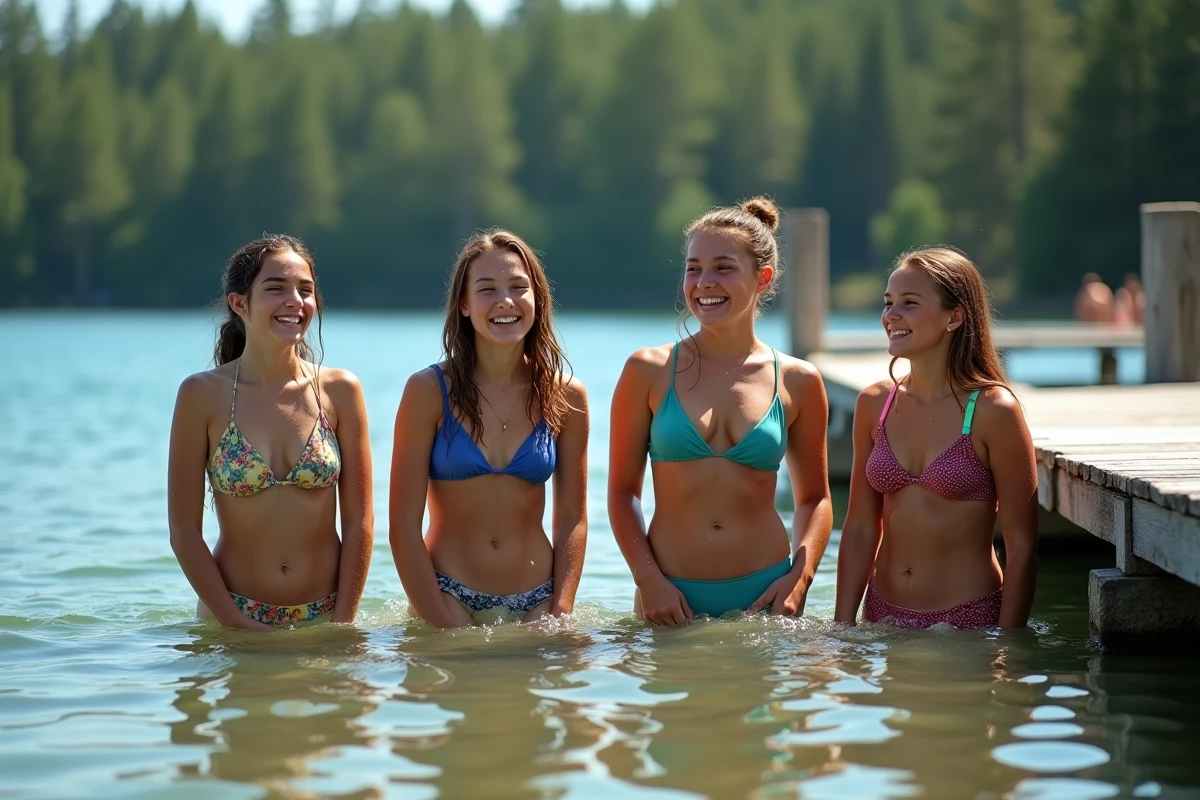
With school vacations stretching over nearly three months and parents limited to a few days off, the question of childcare becomes a logistical and financial issue. Summer camps fulfill a structural role that family vacations do not cover.
These camps, whether residential or day camps, offer sports, artistic, or nature-focused activities. The outdoor experience remains a strong cultural marker: hiking, canoeing, campfires. The duration of a stay varies from one week to two months depending on the programs.
What distinguishes American camps from French holiday colonies
Funding relies almost entirely on families. Fees can represent a significant budget item, especially for residential camps lasting several weeks. There is no federal equivalent to the vacation aids found in France through works councils or the CAF.
The offerings are also highly segmented: specialized sports camps, technology camps, religious camps, camps for children with specific needs. This diversity reflects a private market structured around parental demand rather than a system organized by local authorities.
The American school calendar, its summer traditions, and the scarcity of employee leave form a system where each family navigates with its means. Hybrid working vacations add a recent variable, but they only benefit jobs compatible with remote work. For others, the equation remains one of a long summer for children and a short one for adults.