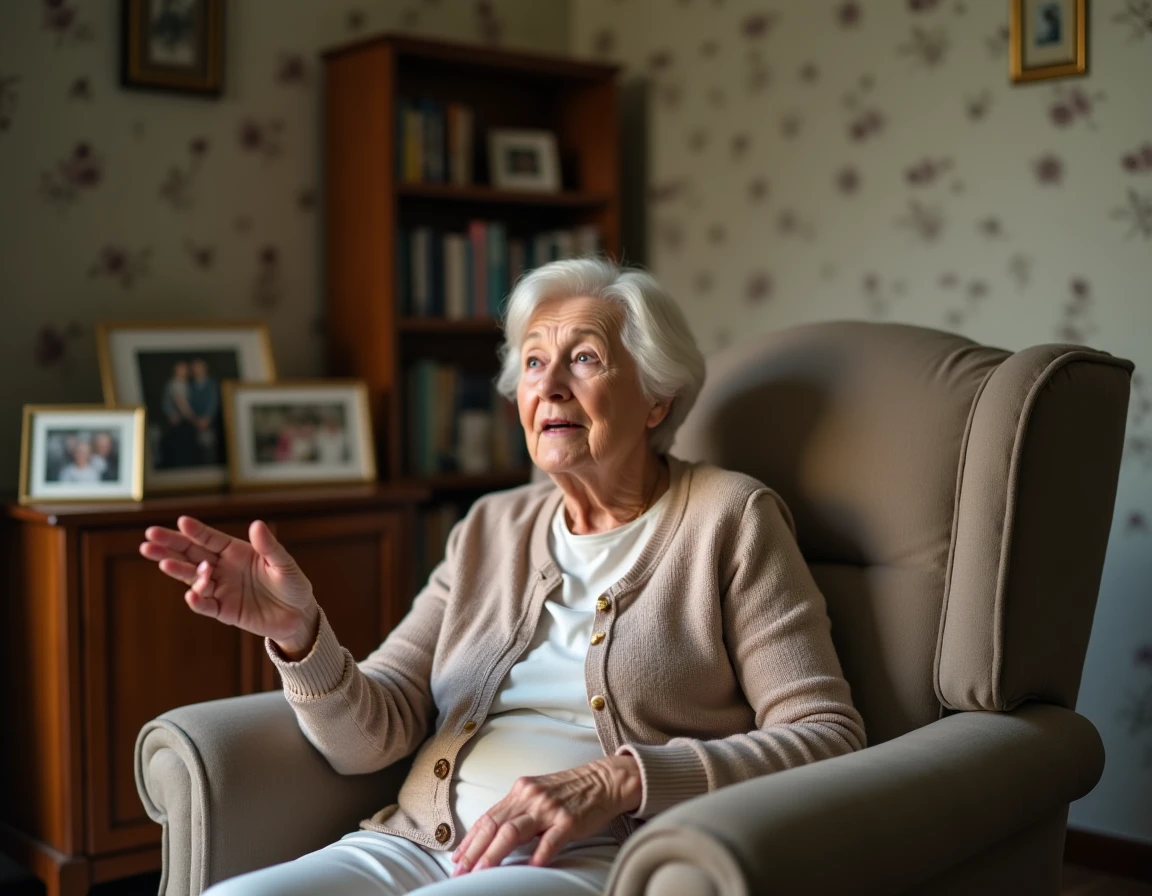
When an elderly person calls for their mother, even one who has been deceased for decades, the common reaction from those around them oscillates between incomprehension and concern. This behavior, frequent in geriatrics, stems from specific mechanisms related to memory, attachment, and sometimes Alzheimer’s disease. Understanding these mechanisms changes the way we respond.
Attachment Theory and Maternal Figure in the Elderly
The word “mom” is not just any word. In psychology, the mother represents the first attachment figure, the one that embodies security from the earliest months of life. This bond, forged in early childhood, does not disappear with age: it reactivates in moments of vulnerability.
For individuals with dementia or facing a loss of autonomy, calling for their mother functions as a reflex for seeking reassurance. Pain, a change of location, hospitalization, or simply the onset of night is enough to trigger this need. The brain, deprived of its usual landmarks, turns to the oldest and deepest bond.
The phenomenon of an elderly person calling for their mother does not literally signify a return to childhood. It is an appeal to the attachment figure: the word “mom” is an emotional shortcut to a feeling of protection, not a confusion about the identity of the interlocutor.
Alzheimer’s Disease and Temporal Confusion: Two Distinct Mechanisms
An elderly person calling for their mother is not necessarily suffering from Alzheimer’s disease. Several mechanisms, distinct from a neurological standpoint, can explain this behavior.

In the context of Alzheimer’s disease, recent memory gradually fades while older memories endure longer. The person may genuinely believe that their mother is alive because the information regarding her death is no longer accessible. This is not a choice; it is a neurological alteration of episodic memory.
At the same time, elderly individuals without severe dementia may also call for their mother, particularly at the end of life. Palliative care professionals observe an increased frequency of these maternal references in the weeks leading up to death. In this case, the mechanism is more about an attempt to make sense of the end of life than a pathological symptom.
Differentiating these two situations allows for a tailored response. A consultation with a doctor remains relevant to assess whether other symptoms (loss of orientation, language difficulties, forgetting loved ones) suggest a neurodegenerative pathology.
Rational Responses and Their Counterproductive Effect on the Patient
Teams in nursing homes and Alzheimer’s services share a clinical observation: correcting the person often exacerbates anxiety instead of calming it. Responding with “But your mother has been dead for thirty years” forces the patient to relive the grief in real-time, like receiving a death announcement for the first time.
This reaction, understandable in an exhausted caregiver, creates a vicious cycle. The elderly person experiences acute distress, cries, then forgets the exchange, only to ask the same question a few minutes later. The caregiver, in turn, accumulates emotional fatigue from repeating this correction.
The approaches recommended by professionals in gerontopsychiatry are based on one principle: validate the emotion rather than correct the fact. In practical terms, this can take several forms:
- Rephrasing around the expressed feeling: “You are thinking of your mom; you miss her” allows for the recognition of the emotion without confirming or denying the reality of the death.
- Offering a sensory anchor: a family photo, music associated with a happy memory, or a familiar object can redirect attention toward a feeling of safety.
- Maintaining reassuring physical contact (a hand on the arm, calm proximity) that meets the need for attachment without relying on language.
Role of the Family Caregiver in Response to These Repeated Calls
Hearing a parent call for their own mother disrupts the usual family hierarchy. The adult child, often having become the primary caregiver, witnesses a vulnerability they have never seen in their parent. This shift provokes feelings of guilt, helplessness, and sometimes irritation.

The difficulties faced by the caregiver in this specific situation deserve to be acknowledged. Repeatedly providing a compassionate response to the same question daily requires emotional regulation that no one can maintain indefinitely. The caregiver’s exhaustion is not a personal failure; it is a predictable consequence of the cognitive and emotional burden.
Some concrete guidelines for family caregivers:
- Identify the times of day when calls for the mother multiply (often in the evening, a period known as “sundowning” in cognitive disorders) and adapt the environment: soft lighting, calming routine, increased presence.
- Seek support from other family members or professionals. A caregiver who never takes a break eventually cannot provide the patience that the situation demands.
- Consult a doctor if the elderly person’s anxiety becomes persistent: medical causes (unexpressed pain, side effects of a treatment, urinary infection) can amplify confusion and calls.
The call for a mother by an elderly person, whether related to Alzheimer’s disease, end of life, or simply a moment of anxiety, tells the story of the persistence of the first human bond. For those around them, the most effective response remains the simplest: welcome the expressed emotion and respond with presence rather than factual correction.