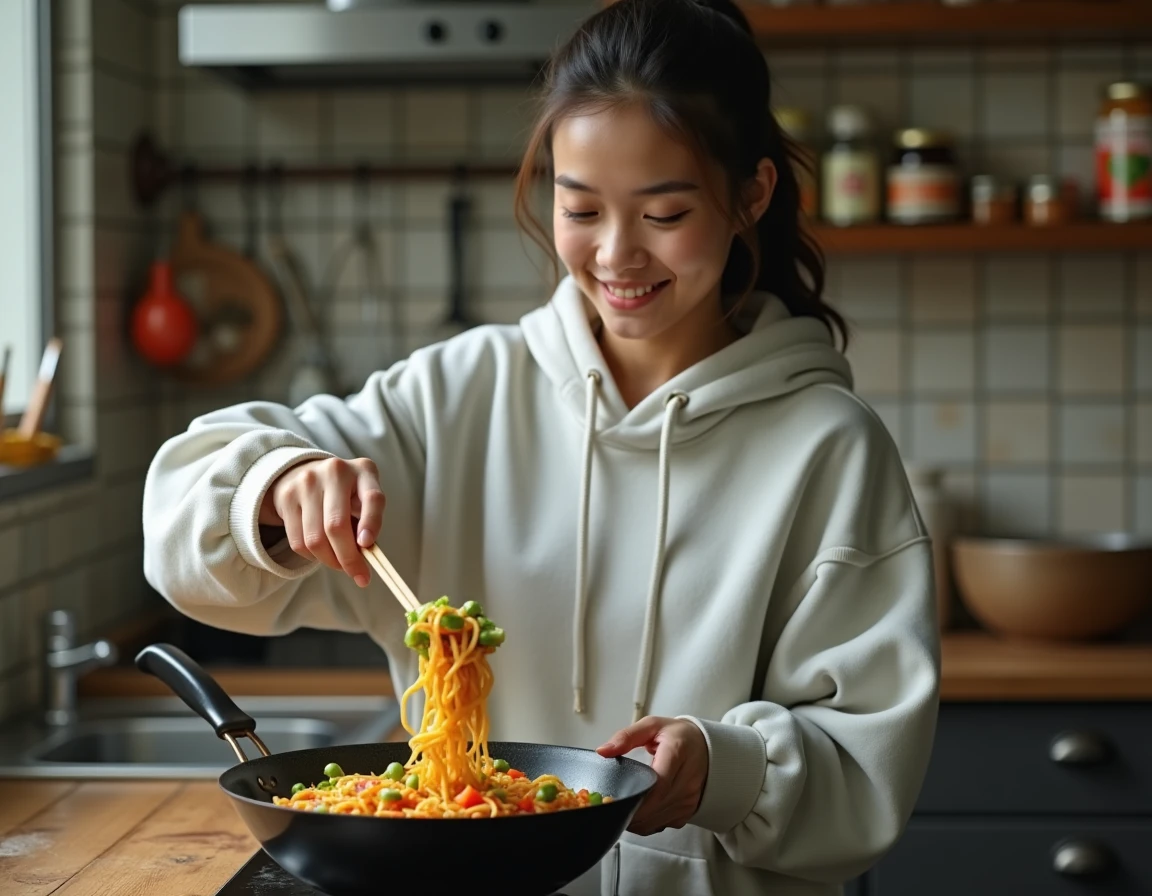
The majority of French students do not have access to a complete kitchen in their accommodation. A significant portion of university residents only have a microwave or a small kitchenette. This material constraint shapes eating habits much more than a lack of motivation or recipes.
Preparing quick and tasty meals when you are a busy student first requires dealing with limited equipment and a tight budget.
Microwave and air fryer: cooking with the actual equipment of students
In university residences, kitchen equipment is most often limited to a microwave, sometimes supplemented by an air fryer. Several CROUS reported between 2022 and 2024 the increasing installation of air fryers in shared spaces, as these devices allow for meals with little fat and no stovetop.
The microwave remains the most common appliance. You can cook scrambled eggs in two minutes in a bowl, reheat a pasta dish prepared the day before, or prepare quick rice with the right amount of water. The air fryer turns diced vegetables into a crispy side dish in about ten minutes, with little to no oil. A chicken breast also cooks evenly in it.
Adapting recipes to these two appliances changes the game. Rather than searching for elaborate dishes requiring an oven and pots, it is better to build a repertoire of “all-in-one” preparations compatible with what you actually have on hand. To discover my idea on TwimmCook, this principle of clever meals designed for minimal equipment is precisely the starting point.
Batch preparation: save time every evening with batch cooking
Searching for a different recipe every evening is exhausting when juggling classes, revisions, and sometimes a part-time job. Preparing two or three bases at the beginning of the week reduces daily cooking time to just a few minutes.
The principle is simple: dedicate an hour on Sunday to cook a large quantity of rice, pasta, or potatoes, then prepare a sauce and chop vegetables. For the rest of the week, each meal becomes a quick assembly.
Versatile bases to prepare in advance
- Plain rice or cooked pasta stored in the refrigerator serves as the base for a cold salad on Monday, a stir-fry on Tuesday, and an express gratin on Wednesday.
- A homemade tomato sauce (canned tomatoes, onion, garlic, herbs) can be frozen in individual portions and pairs well with both pasta and vegetable dishes or eggs.
- Chopped vegetables (peppers, zucchini, carrots) ready to go in the air fryer or microwave without any additional preparation.
- Hard-boiled eggs cooked in batches of six, which keep for several days and complement any salad or wrap.
This batch approach also reduces food waste. You buy in appropriate quantities, cook all at once, and avoid forgotten leftovers at the back of the refrigerator.
Student grocery budget: structure your shopping rather than seeking the cheapest
Consistently buying the cheapest products at the supermarket does not guarantee good value for the week. Without a meal plan, you accumulate hard-to-combine ingredients, some of which end up in the trash.
Structuring your shopping around four or five basic ingredients yields better results. Eggs, pasta, rice, frozen vegetables, and chicken (or legumes for an even tighter budget) cover the vast majority of meals for the week.
Frozen vegetables deserve attention. Their price per kilo is often lower than that of fresh vegetables, they do not spoil in three days, and their nutritional value remains comparable since they are frozen right after harvest. A bag of frozen broccoli or green beans can be cooked in the microwave in just a few minutes.

The trap of meal kits for students
Since 2022, services like HelloFresh, Quitoque, or Seazon have launched offers targeting small budgets and small spaces, with recipes ready in under twenty minutes. The format is appealing: few utensils, portioned ingredients, integrated shopping list.
However, the cost per meal of these kits remains higher than that of homemade preparations based on raw ingredients. For a student whose food budget is already constrained, the monthly subscription can be burdensome. These services are more useful as a one-time learning tool (discovering recipes, understanding proportions) than as a daily solution.
Realistic quick recipes: three dishes to master rather than twenty to skim over
Rather than a long list of recipes, three well-practiced dishes allow you to get through the week without boredom, varying the toppings.
The topped rice bowl is probably the most adaptable student meal. Precooked rice reheated in the microwave, sautéed or raw vegetables (avocado, cucumber, grated carrot), a protein (fried egg, shredded chicken, canned tuna), a sauce (soy, sesame, yogurt-lemon). Everything can be prepared in under ten minutes when the rice is already cooked.
Express pasta with sauce works on the same principle. Precooked pasta, thawed homemade tomato sauce, refrigerator vegetables, a bit of grated cheese. The actual preparation time drops to under five minutes with a base already ready.
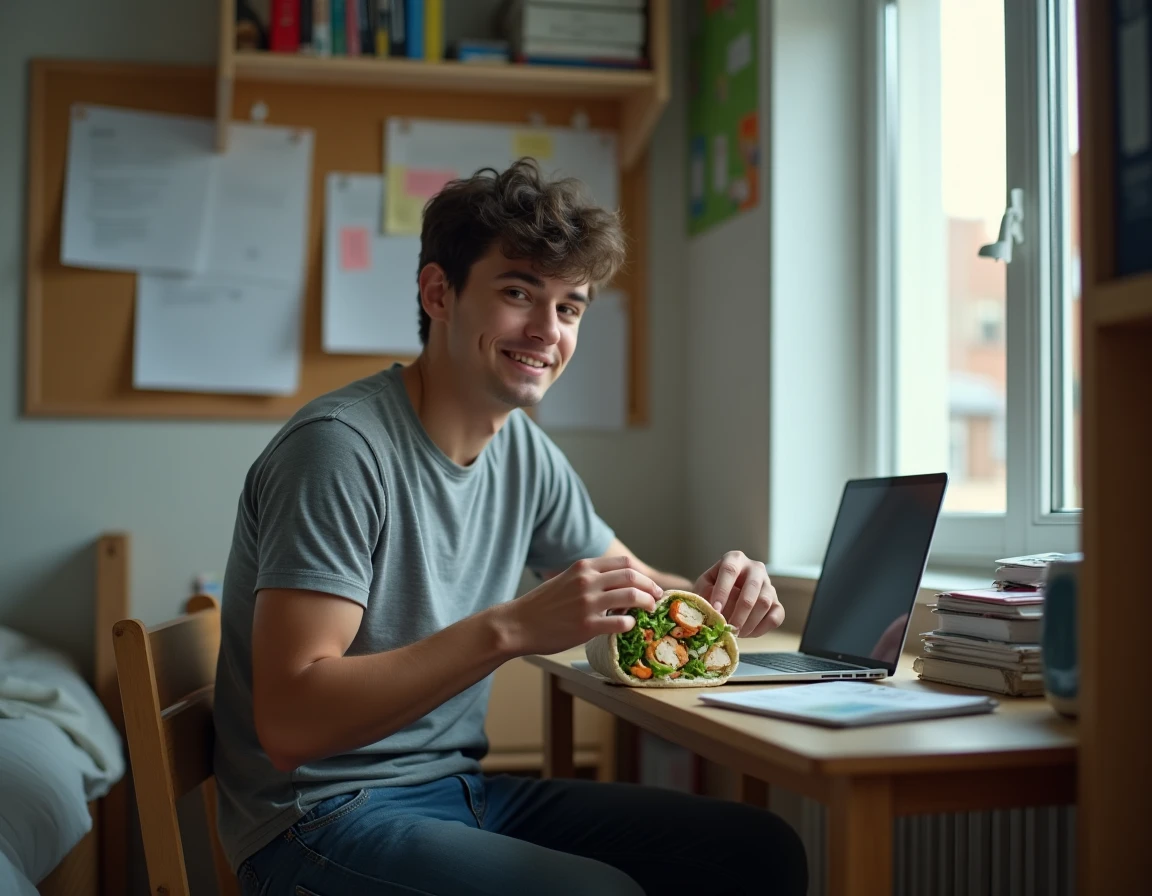
The wrap or filled tortilla offers a third option without cooking. Salad, cold chicken or hard-boiled egg, raw vegetables, sauce of choice. This format is easy to transport for a meal between classes.
These three dishes cover different flavor profiles and use the same basic ingredients bought at the beginning of the week. Variety comes from the toppings and seasonings, not from multiplying recipes.
Identified equipment, prepared bases in advance, groceries structured around a few versatile ingredients: these three elements are enough to cover the week without dedicating more than a few minutes each evening.