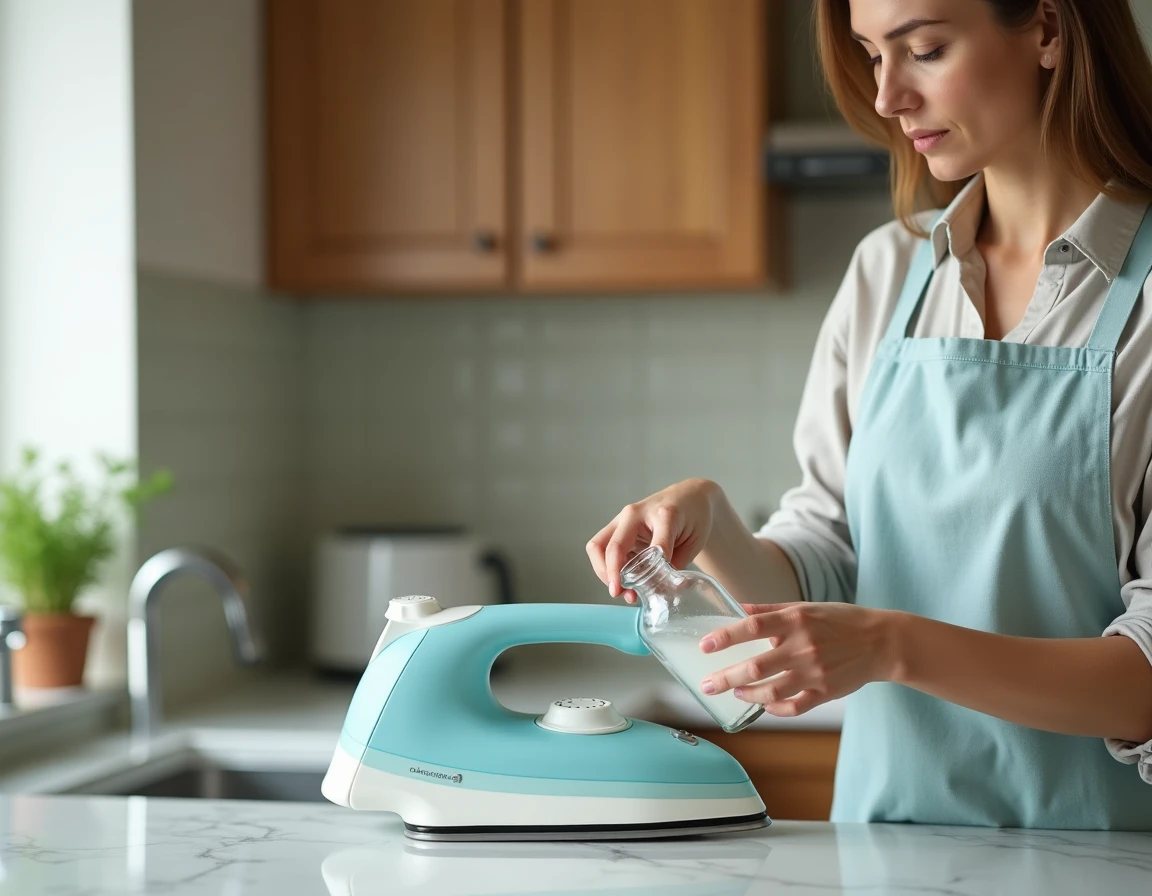
The Calor Express Anti-Calc steam generator features a system designed to limit the buildup of limescale. This device does not eliminate the need for regular maintenance, but it changes the way descaling should be conducted. The manuals released by Calor since 2022 have actually tightened their recommendations on authorized products, a point that most online tutorials still overlook.
Prohibited descaling products for the Calor Express Anti-Calc: what the manual has changed
The most common reflex for descaling a steam generator remains diluted white vinegar. On recent Calor Express Anti-Calc models, this practice is explicitly discouraged by the manufacturer. The manuals available on the official Calor/Rowenta website specify that white vinegar can damage the seals and the coating of the boiler, and that its use voids the warranty.
Feedback published on specialized troubleshooting forums since 2023 confirms the problem from another angle. Repair technicians report signs of corrosion and leaks around the pressure and temperature probes, directly linked to the use of non-recommended products. Coffee machine descaler and concentrated citric acid cause the same damage.
A comprehensive guide on descaling the Calor Express Anti-Calc steam generator helps to better understand this constraint: only products and specific procedures validated by Calor, or simply rinsing the tank with clear water, preserve the device in the long term.
Descaling frequency according to water hardness: adjust the rhythm to your situation
Generic tutorials recommend descaling monthly or every two months, without distinction. This uniform approach does not take into account the determining factor: the hardness of tap water, which varies greatly from one municipality to another in France.
Soft water, hard water: two different maintenance regimes
In an area where the water is low in limescale, the Anti-Calc system integrated into the generator is sufficient to maintain normal operation for several months without intervention. However, rinsing the tank with clear water after several weeks of intensive use is still recommended.
In a very hard water area, preventive descaling becomes the priority rather than curative descaling. In this case, Calor recommends mixing tap water and demineralized water in the tank to reduce the concentration of limescale at the source. A point of caution often absent from guides: never use exclusively pure demineralized water, as this can cause incorrect detection of the water level and disrupt heating.
Spotting signals before it’s too late
Rather than following a rigid schedule, observing the behavior of the generator yields better results. The signals to watch for:
- The steam flow gradually decreases, and the laundry remains damp after passing the iron
- White particles or limescale deposits appear on clothes or on the soleplate
- The generator takes longer to build pressure or makes unusual noises during heating
These symptoms indicate that the Anti-Calc collector has reached its limits and that cleaning the tank is necessary.
Validated rinsing method for the Calor steam generator tank
The procedure recommended by the manufacturer is based on a simple principle: rinse the tank with clear water without any chemical additives. This involves filling the boiler with tap water, letting it sit for a few minutes, and then completely emptying it by tilting the device (after it has fully cooled).
Repeating this operation two to three times helps to remove suspended limescale residues. The Anti-Calc collector, depending on the model, can be removed and rinsed separately under the tap. Checking its condition during each rinsing allows for early detection of premature wear.
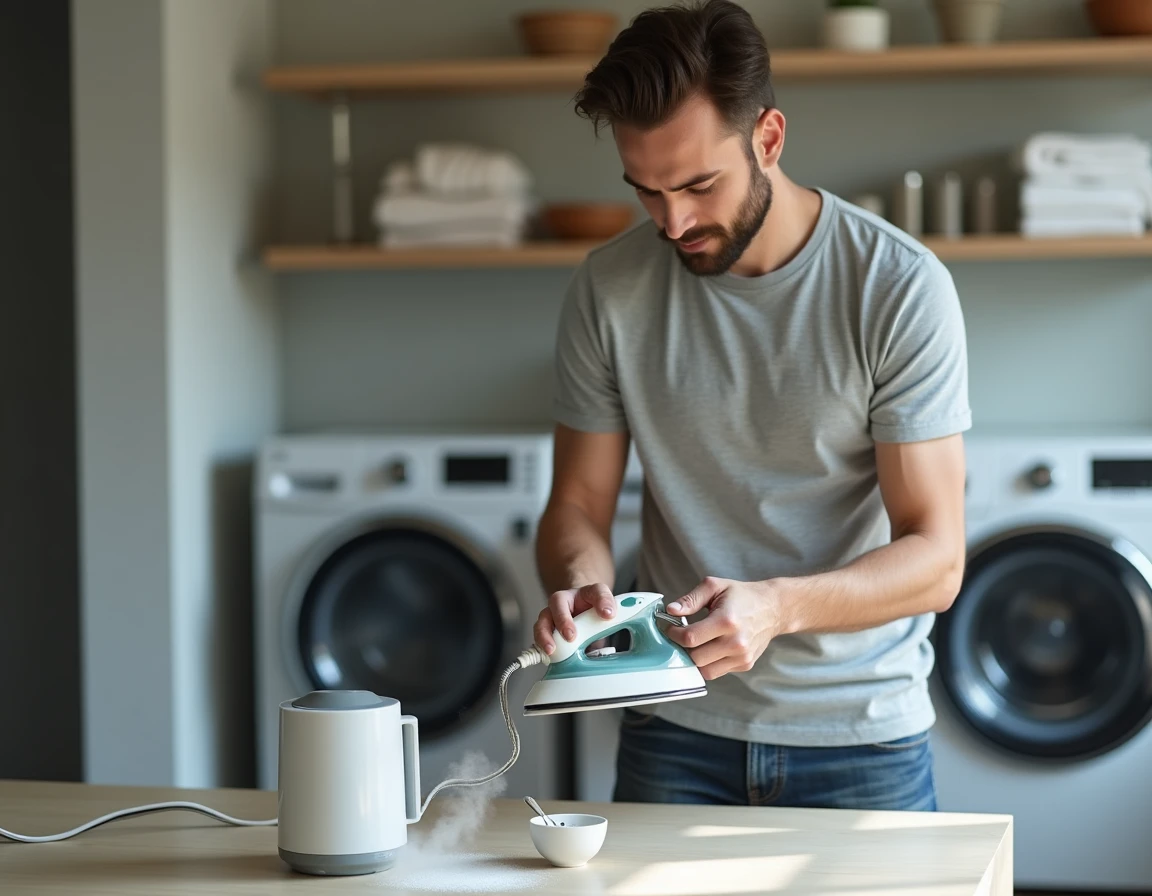
For cases of advanced limescale, this rinsing alone is not always sufficient to restore normal operation. When the tank is already heavily scaled (absence of steam, complete blockage), going to customer service may sometimes be the only option, as repair technicians have cleaning solutions suitable for the internal chemistry of the boiler.
Maintenance of the iron soleplate and steam circuit: complementary actions
Descaling the tank does not solve everything. The soleplate of the iron accumulates limescale residues and textile fibers that reduce glide and clog the steam holes.
- Wipe a damp cloth on the warm soleplate (never on a cold or hot soleplate) after each ironing session
- Never scrape the soleplate with an abrasive object, as the Durilium coating of Calor Express models is sensitive to scratches
- Use the steam boost function while empty over a sink to expel accumulated residues in the steam ducts
- Always empty the tank after each use to avoid stagnant limescale water
Emptying the tank after each ironing session remains the most effective preventive action to limit limescale buildup in the entire circuit.
What the Anti-Calc system does not filter
The Anti-Calc device primarily acts at the level of the tank and the collector. It does not protect the entire steam circuit or the soleplate of the iron. Regular maintenance of the soleplate and ducts remains necessary even on models equipped with this system. The “anti-limescale” promise of the commercial name only covers part of the problem.
On generators used daily in hard water areas, repair technicians find that failures of pressure or temperature sensors occur despite the Anti-Calc system, often because the user has neglected tank rinsing or used an unsuitable product. The type of water used and the regularity of cleaning directly affect the lifespan of the device.