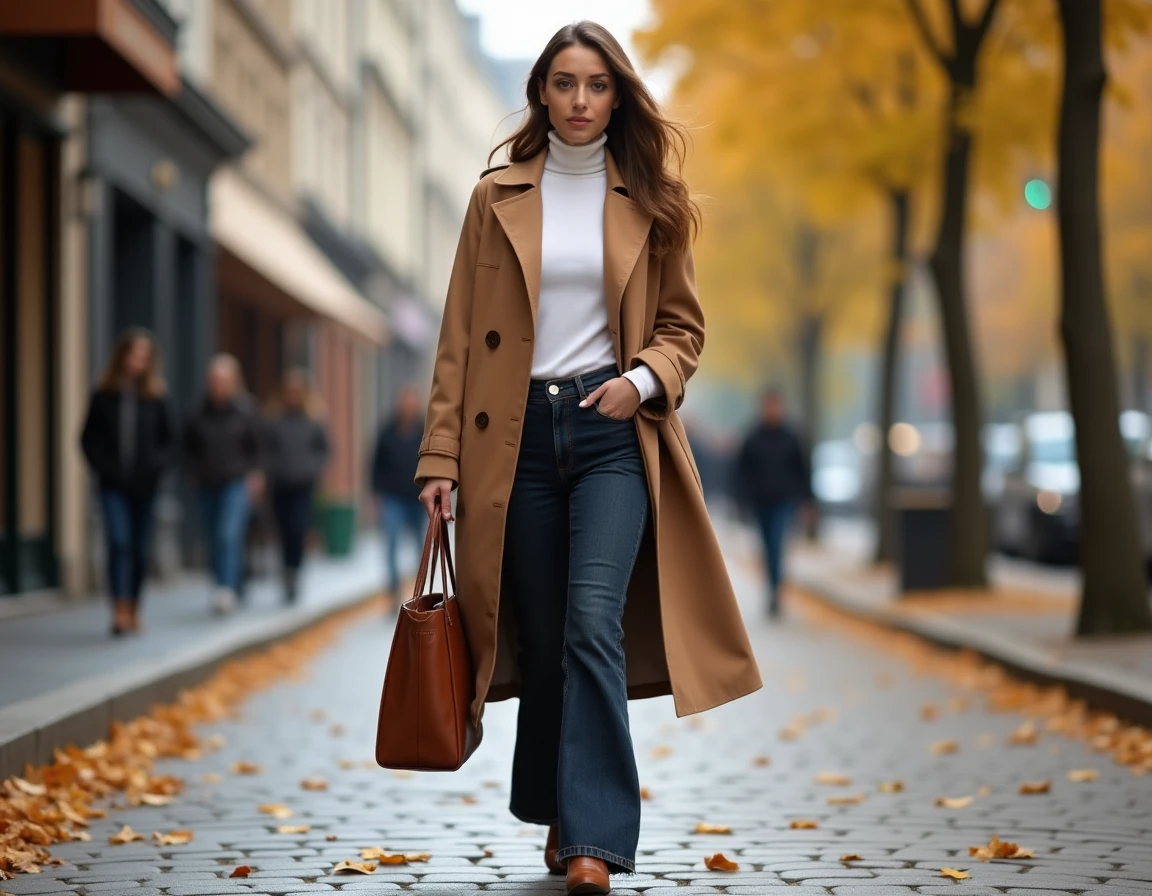
One morning during the week, we open the closet, grab three pieces at random, and the result looks like nothing. The problem doesn’t come from the number of clothes, but from how we combine them. Current fashion trends are pushing in this direction: fewer accumulated pieces, more reusable look formulas for everyday wear.
Subtle materials and clean cuts: quiet luxury adapted for everyday
The realm of quiet luxury, long reserved for high-end brands, has spread to mid-range retailers. Specifically, we’re talking about neutral colors (cream, heather gray, navy blue), straight cuts, and materials that last several seasons without losing shape.
On the ground, this changes how we put together an outfit. A pair of straight wool-blend trousers, a poplin shirt, and loafers are enough to cover a day at the office followed by dinner. Three subtle pieces replace ten haphazard combinations.
You can find in the fashion selection of Belle et Épanouie this type of pieces designed for repeated use, far from disposable fast fashion.
Opinions vary on this point, but a natural material (thick cotton, linen, wool) ages better than a synthetic fabric, even if it requires more careful maintenance. We gain durability what we lose in ease of washing.
Building a capsule wardrobe around reusable trendy pieces
The principle of a capsule wardrobe is based on a voluntary constraint: reducing the number of active clothes in the closet to maximize combinations. Second-hand platforms like Vinted or Vestiaire Collective are seeing a significant increase in transactions for everyday pieces (jackets, jeans, shirts), showing that this approach goes beyond a simple fashion trend.
The key pieces of a functional wardrobe
An effective capsule relies on pieces that work together without thinking. Here are the categories to prioritize:
- A neutral, structured bottom (raw jeans, chinos, midi skirt) that pairs with most tops in the wardrobe
- A simple-collared top (shirt, flowy blouse) for contexts where a t-shirt won’t do
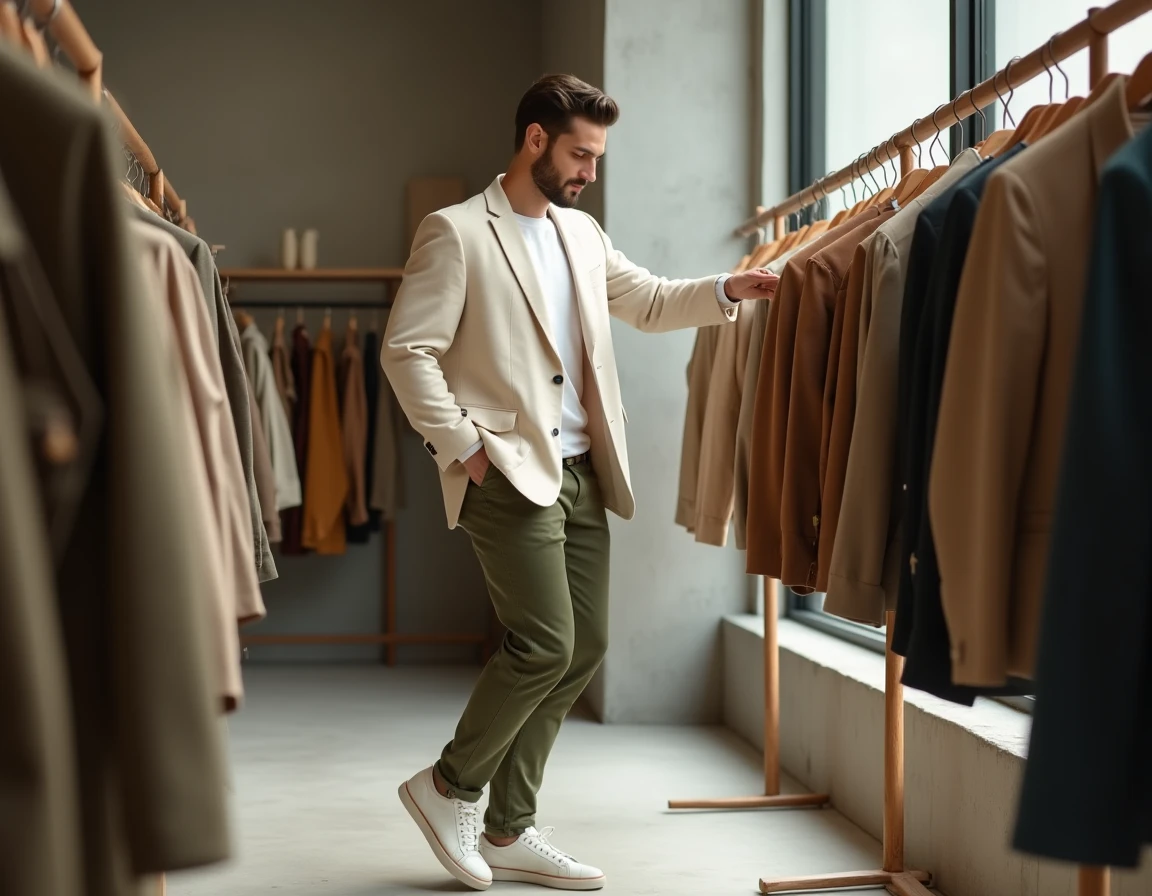
- A versatile mid-season jacket (straight blazer, short trench, linen jacket) that elevates a basic outfit in thirty seconds
- A pair of closed shoes in a versatile color, comfortable enough to wear all day
Each piece must be combinable with at least three others to justify its place. If a garment only works with one outfit, it clutters the closet more than it serves.
Testing a trend without overloading your closet
Clothing rental is growing in France, including for everyday pieces. Before buying a dress in the season’s key color or a tropical floral print, you can rent the piece for two weeks. If you wear it three times, the purchase is justified. Otherwise, you’ve saved money and space.
Seasonal colors and prints: wearing the trend without falling into costume
The seasonal palettes offered by brands range from pastel tones (sky blue, mint green, powder pink) to bright colors (red, sunny yellow, vivid green). The common trap is to adopt the trendy color from head to toe.
In practice, a single colored piece is enough to anchor a look in the season. A butter yellow top worn with navy trousers and white sneakers works better than a total monochrome look that tires the eye after twenty minutes.
Floral prints and geometric patterns: dose them correctly
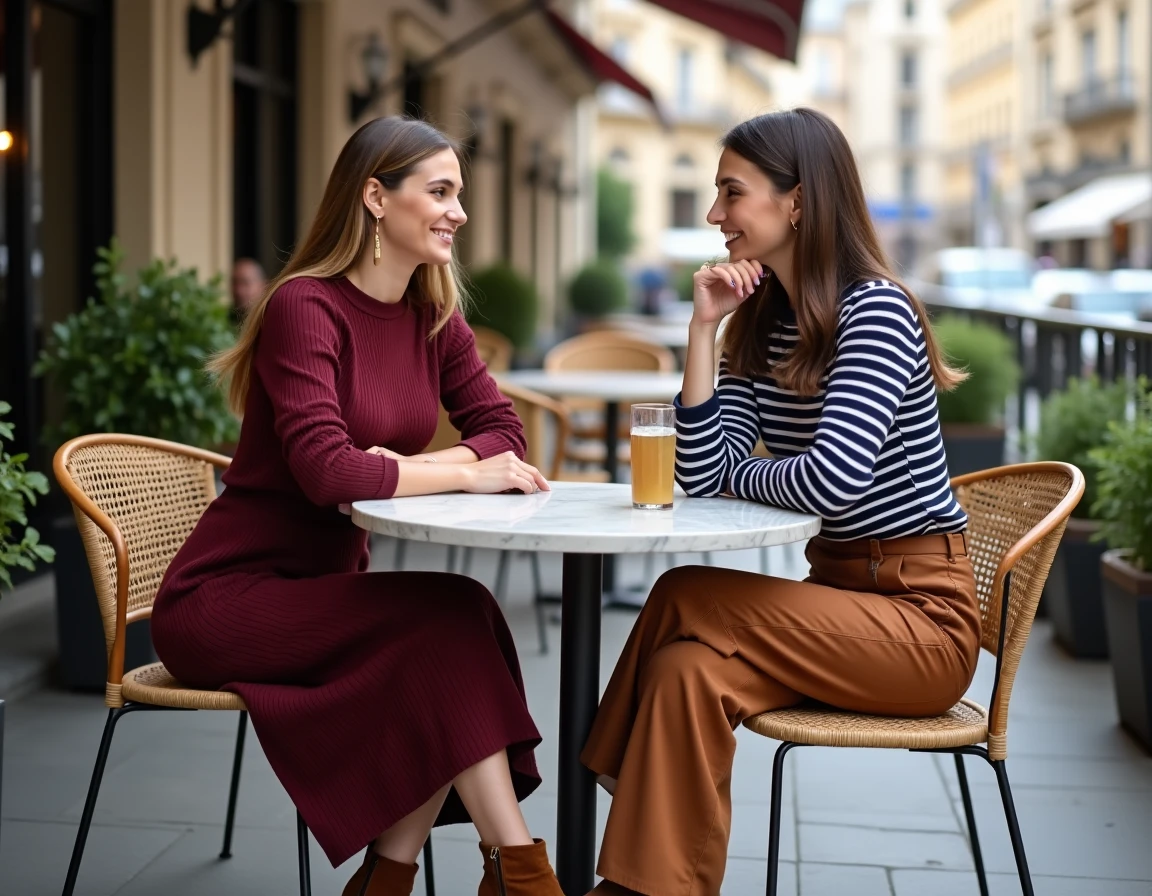
Floral prints return every spring in tropical or exotic versions. Stripes and geometric patterns also maintain their place. The operational rule is simple: one print per outfit, the rest in solid colors.
Mixing two prints requires a trained eye and a composition time that most of us don’t have at seven in the morning. It’s better to concentrate the visual effect on one piece, a skirt or a shirt, and let the rest breathe.
Everyday style and the search for looks: what Google queries reveal
Search data shows a clear shift. Internet users no longer just type “trendy summer dress” or “autumn winter fashion color.” They are looking for formulas: “how to wear an oversized blazer to the office,” “chic look with raw jeans,” “minimalist everyday outfit.”
This change in behavior reflects a concrete need. We no longer want a list of trends to passively consult. We want combinations ready to reproduce the next morning.
To meet this need, structuring your wardrobe by “formulas” rather than by categories of clothing helps a lot. Instead of sorting shirts on one side and trousers on the other, you can physically group tested and approved outfits on common hangers.
Adapting your looks to the season without buying everything new
The transition from autumn-winter to spring-summer doesn’t require a complete overhaul. You replace warm layers with lighter versions of the same type of piece. A turtleneck sweater gives way to a thick cotton t-shirt. A parka is replaced by a linen jacket. The structure of the look remains the same, only the thickness changes.
This seasonal substitution logic reduces impulsive purchases and gives more coherence to style throughout the year. It works equally well with new pieces and second-hand finds, which aligns with the rise of resale platforms for everyday wardrobes.
The real lever to enhance your everyday style is not found in the accumulation of fashion trends, but in mastering a few reliable formulas. Three or four tried-and-true combinations, pieces that work together, a touch of controlled color: that’s all you need to step out of the house with a look that holds up from morning to night.