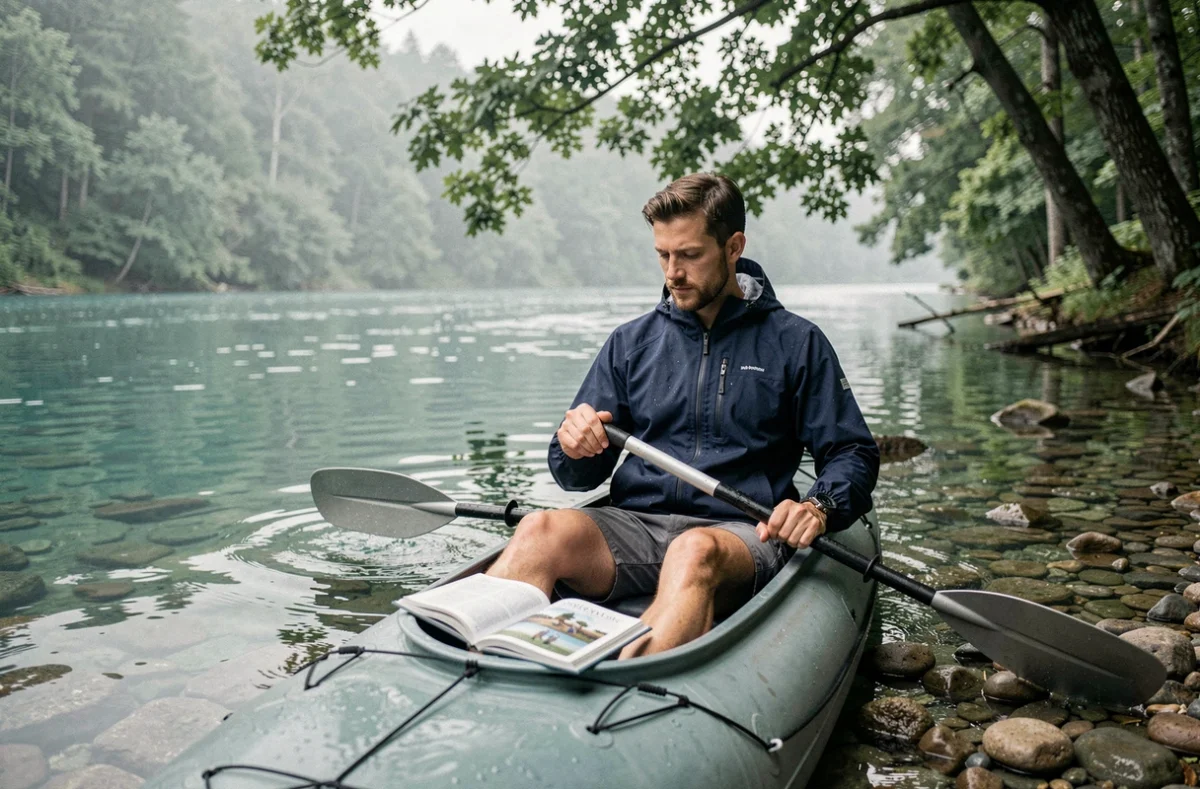
The inflatable kayak market has expanded considerably in recent years, with models ranging from entry-level options costing under two hundred euros to technical craft priced at over a thousand euros. With such a wide selection, choosing a kayak is about more than balancing price against build quality. Its length, the materials used and the type of water it is designed for directly determine what paddlers can—and cannot—do once they’re on the water.
Maritime regulations and inflatable kayak length: an often-overlooked factor
Most buying guides compare stability, seat comfort and ease of inflation. Few mention that a kayak’s length determines the regulations governing sea navigation, regardless of the paddler’s skill level.
In France, a kayak under 3.50 m is classified as beach equipment. This category limits navigation to within 300 metres of the shore. With a model measuring at least 3.50 m, you can travel up to 2 nautical miles from a shelter during daylight, provided you carry the required safety equipment. The distance is measured from a shelter (such as a harbour or launching slipway), not simply from the coastline.
Before buying, check the model’s exact length and the intended use specified by the manufacturer. Even if it is stable and well built, a 3.20 m inflatable kayak restricts its user to the 300-metre zone at sea. If you’re looking to choose an inflatable kayak for more ambitious coastal trips, this technical detail matters just as much as comfort or price.
Materials and dropstitch technology: how they affect on-water rigidity
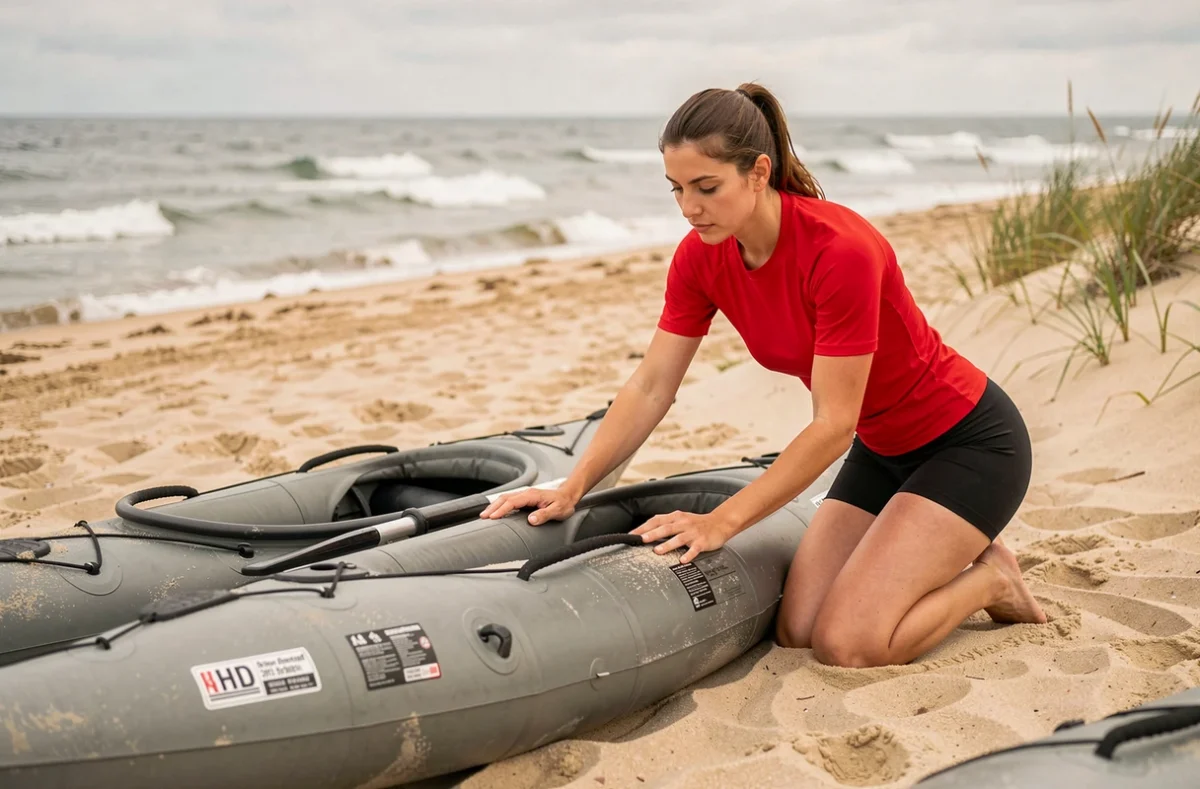
Inflatable kayaks are mainly made from three types of material: standard PVC, PVC reinforced with a nylon layer, and dropstitch. The latter deserves particular attention because it genuinely changes how the kayak performs.
Dropstitch construction connects the kayak’s upper and lower surfaces with thousands of taut threads. When inflated to high pressure, the kayak becomes almost as rigid as a semi-rigid hull. This improves glide, tracking and responsiveness to paddle strokes. A standard PVC kayak inflated to low pressure remains more flexible and slower, and deforms more under strain.
Which material for which use?
- Standard PVC is suitable for occasional outings on calm water (lakes and ponds), for paddlers who prioritise affordability and easy transport.
- Nylon-reinforced PVC offers a good compromise for regular trips on calm rivers or close to shore, with better abrasion resistance.
- High-pressure dropstitch is for paddlers seeking performance close to that of a rigid kayak, over longer distances or in less sheltered conditions.
The material also affects the kayak’s lifespan. A standard PVC kayak regularly exposed to sun and salt will deteriorate faster than a reinforced-fabric model that is deflated and stored out of the elements.
Whitewater and inflatable kayaks: what to know before you set off
Some manufacturers offer inflatable kayaks designed for whitewater, sometimes called kayak rafts. These models are available and can perform well, but the kayak alone won’t make a route suitable for a beginner.
A whitewater trip requires additional equipment: a helmet, a properly fitted buoyancy aid and thermal protection suited to the water temperature—not the air temperature. Group equipment and the group’s ability to organise a rescue matter just as much as the boat’s specifications. A stable, impact-resistant inflatable kayak won’t protect you from a hydraulic recirculation or getting trapped against an obstacle.
For beginners tempted by river paddling, the question isn’t “Is this kayak designed for whitewater?” but “Does my group have the skills and safety equipment for this river, at this flow rate and at this time of year?”
River grades and progression
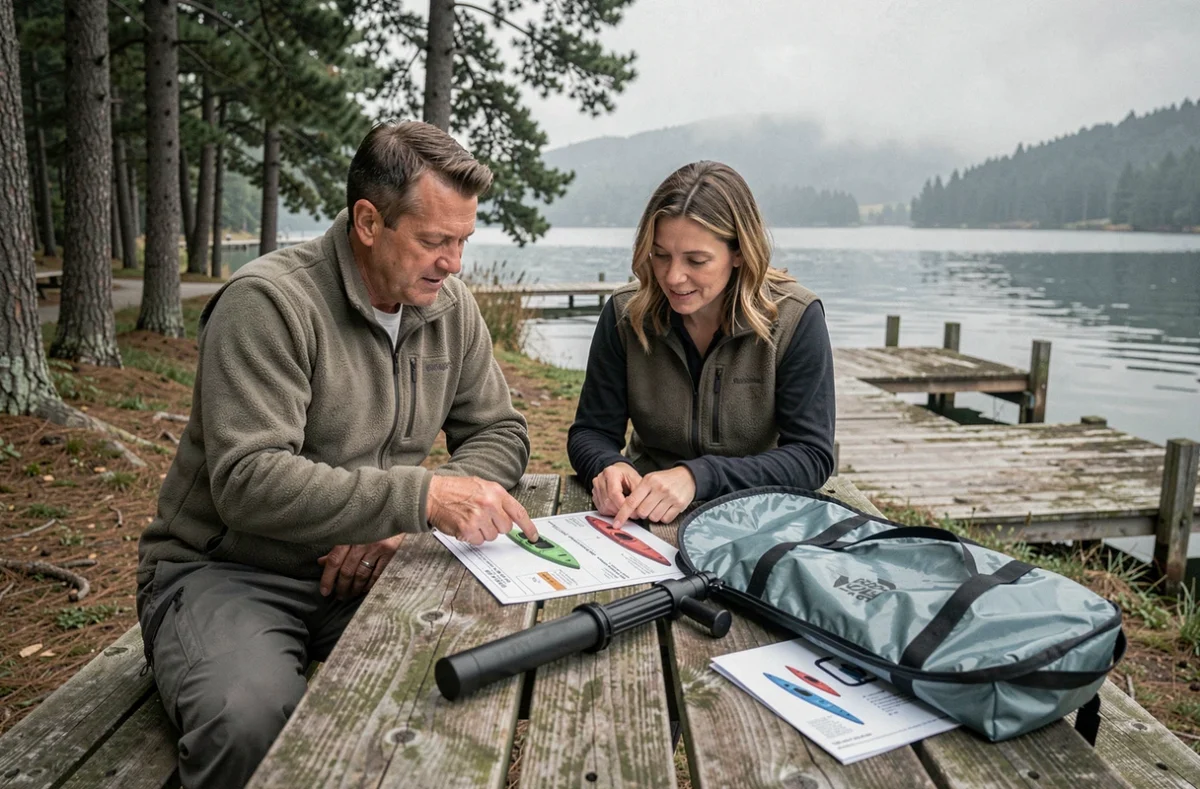
Rivers are graded from I (calm water with a few ripples) to VI (extreme). A recreational inflatable kayak is suited to Grade I and II rivers. Beyond that, the type of boat matters less than the paddler’s experience and the quality of supervision. General consumer guides don’t always specify the recommended river grade limits for each model, leaving buyers with some uncertainty.
Capacity and configuration: solo, tandem or convertible
Choosing between a solo and tandem kayak isn’t just about the number of passengers. A tandem kayak paddled solo handles differently: it’s heavier, wider and less manoeuvrable, but also more stable. Some convertible models let you reposition the seat to paddle alone in a kayak designed for two.
A tandem kayak used solo weighs more and moves more slowly, but offers extra storage space for day trips with gear. A solo kayak, by contrast, is more responsive and easier to transport, and takes up less space when deflated.
It’s also worth checking the maximum load capacity. Manufacturers specify a weight limit that includes the paddler and their equipment. Exceeding it reduces buoyancy and stability and lowers the freeboard, increasing the risk of water coming aboard.
Accessories and paddles: costs often underestimated in the budget
An inflatable kayak sold as a package usually includes a paddle, a seat and a pump. The quality of these accessories varies considerably. A heavy, poorly balanced entry-level aluminium paddle can tire your arms and shoulders on trips lasting more than an hour.
- The paddle is the first item to upgrade: a fibreglass or carbon paddle reduces fatigue and improves propulsion.
- The included inflatable seat often lacks lumbar support, which is a key consideration on longer trips.
- A high-pressure pump is essential for dropstitch kayaks, which require higher inflation pressure than standard PVC models.
Including the cost of replacement or upgraded accessories in your overall budget helps avoid unpleasant surprises. An attractively priced kayak can end up costing considerably more once it’s properly equipped.
Choosing an inflatable kayak is a decision that can affect several seasons of paddling. Check its regulatory length, understand how the material affects rigidity, assess your whitewater skills honestly and budget for accessories to avoid buying a kayak that ends up at the back of the garage after just three outings.